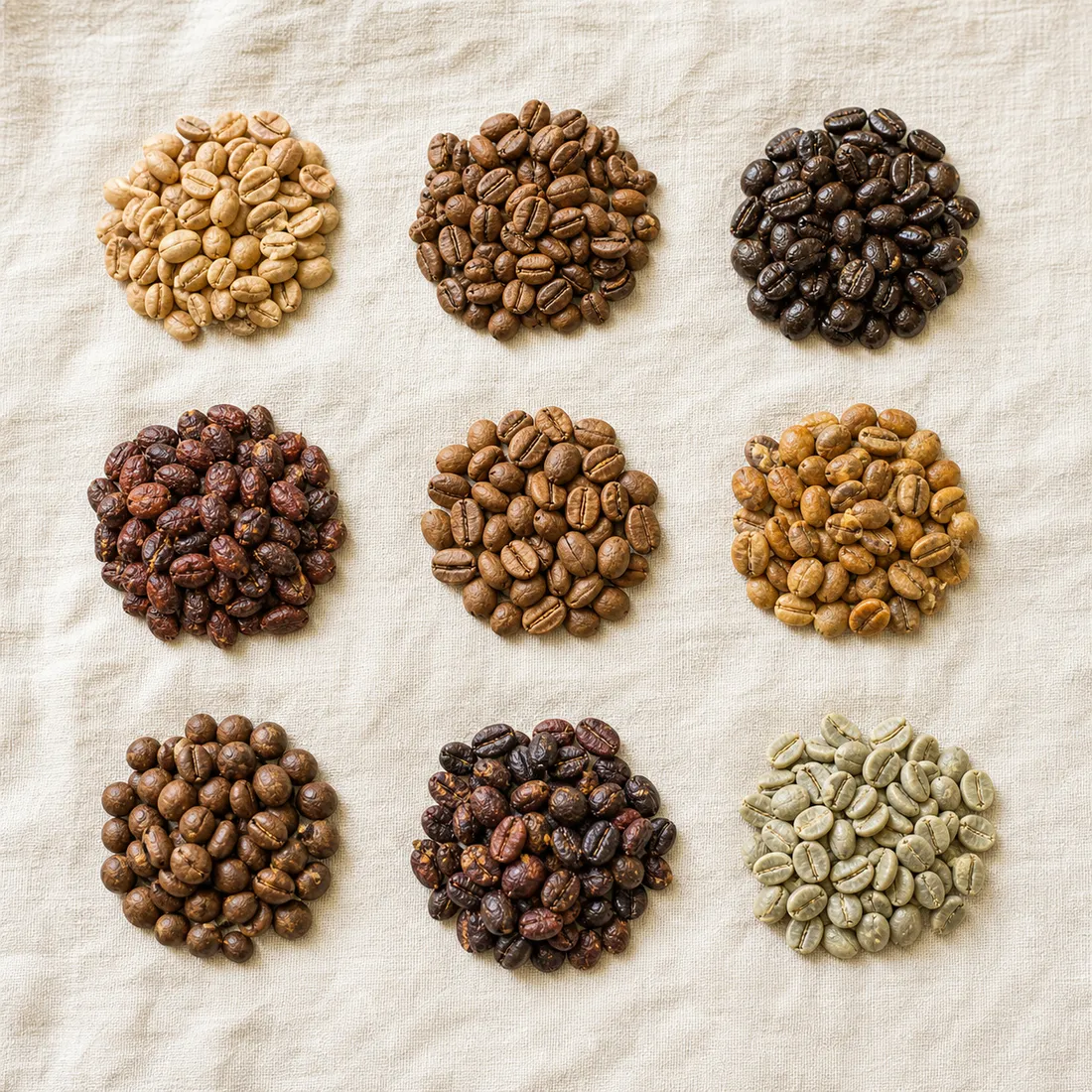
The first time I ordered a fermented coffee at a café, I sent it back. Thought they mixed up my order or
something went wrong in the kitchen.
It tasted like grape juice. Like someone dissolved a fruit candy into my espresso. I sat there genuinely
confused — I ordered a black coffee, not a ribena. The barista just smiled and said "that's how it's supposed to
taste."
I didn't believe him. I Googled it on the spot. And that was the beginning of a very expensive rabbit hole.
If you've ever picked up a coffee bag that says "anaerobic natural" or "co-fermentation" and had absolutely
zero idea what that means — this is the guide I wish I had. I'll explain what fermentation actually is, why it
makes coffee taste so different, and then we go through 20 fermented coffee beans you can actually find and buy.
What is fermentation in coffee, actually?
Here's the thing — fermentation in coffee is not new. It's been happening for hundreds of years, just not on
purpose. When coffee cherries sit in a pile waiting to be processed, they naturally start to ferment. The sugars
in the fruit break down, microorganisms get to work, and the whole mess gets funky.
For a long time, producers tried to control fermentation and keep it minimal. Too much fermentation =
defect. Too much funk = bad batch. They'd rinse the beans quickly, dry them fast, move on.
Then somewhere in the 2010s, a group of producers — mostly in Colombia, Costa Rica, and Ethiopia — started
asking: what if we controlled the fermentation on purpose? What if we could make it taste like that, but
consistently, and intentionally?
And that's when everything changed. For the bigger map of washed, natural, honey and fermented styles, start with the coffee processing methods guide.
☕ The simple version
Coffee cherries have sugars in the fruit flesh. When you expose those sugars to yeast, bacteria, and time —
in specific conditions — the microorganisms eat the sugars and produce acids, alcohols, and flavour compounds
that soak into the bean. That's fermentation. The type of container, the temperature, the oxygen level, the
duration, and what you add to the tank all change the outcome.
How does fermentation change how your fermented coffee beans taste?
Normal coffee tastes like… coffee. Roasted, bitter, a bit of acidity, maybe some chocolate or fruit if it's a
light roast. You know the deal.
Fermented coffee tastes like coffee went on holiday and came back a completely different person.
Depending on how it was done, you might get:
- Thick, winey, almost Pinot Noir-like depth
- Tropical fruit that's almost too intense — like passion fruit syrup
- Bright berry notes that taste like actual fresh strawberries
- Floral notes so delicate it smells like jasmine in a cup
- And in the more experimental ones — lychee, peach, blueberry, even whisky
The range is wild. That's why I put together this spectrum — so you know what you're getting into before you
spend money on a bag.
🌈 The Fermentation Flavour Spectrum
Clean & Floral
Fruity
Winey
Funky
Bold & Wild
Anaerobic washed sits on the
clean left. Co-fermentation and yeast inoculation can sit anywhere depending on the fruit. Anaerobic natural
and carbonic maceration tend to live in the middle to right. Barrel-aged and specialty ferments are on the far
right — bring your wallet.
Why is everyone suddenly obsessed with fermented coffee beans?
Honestly? Because it gives producers a way to create something nobody else has.
Think about it this way. Origin, varietal, altitude — a lot of that is fixed. You can't move your farm. You
can't change the microclimate. But processing? That's where the artistry lives now. Two farms on the same hill
in Ethiopia can produce completely different cups just by changing the fermentation method.
And for coffee drinkers? It's a whole new world. People who used to say "I don't like black coffee" are
suddenly drinking black coffee because the fermented stuff doesn't taste like what they expected coffee to taste
like. It tastes like fruit. Like dessert. Like something interesting.
That's not a gimmick. That's actually a bridge into specialty coffee for a lot of people. And I think that's a
good thing.
🫙 Anaerobic Natural
Why do anaerobic natural fermented coffee beans hit differently?
Anaerobic means no oxygen. The coffee cherries — fruit and all — go into a sealed tank or bag. Oxygen is purged
out. The cherries ferment in their own juices for anywhere from 24 hours to several days. Then they come out and
dry naturally, still with the fruit on.
The result? Dense, heavy, intensely fruity cups. If you want the baseline comparison first, read natural vs washed coffee before jumping into these ferments. The fruit flavours from fermentation layer on top of the
natural fruit flavours from the cherry drying process. Double the intensity, double the weirdness, double the
deliciousness.
This is usually where people first encounter "wait, why does my coffee taste like wine" territory. If you're
new to fermented coffee, start here.
01 — Anaerobic Natural
Honduras Finca Gosen H-27 Anaerobic Natural
Nine Lives Coffee Roaster
Anaerobic Natural
Honduras
H-27 · 1500 Masl
RM 87 / 200g
🍍 Taste notes: Tropical Fruits, Cherry, Raisin
This is a good starting point if you've never tried anaerobic natural before. The
tropical fruit and cherry are distinct but not overwhelming — it doesn't taste like someone dropped a fruit
salad in your cup. It's still recognisably coffee, just with this warm sweetness underneath, and the raisin
note on the finish keeps it grounded rather than sharp. H-27 is an unusual varietal to see in Malaysia, and
Finca Gosen is one of the Honduran farms that's been quietly good at anaerobic processing for years. Roasted
for filter.
View bean →
02 — Anaerobic Natural
Brazil Gabarra Gondol
Arkib Kopi · 96 Hours Natural Anaerobic
96 Hours Anaerobic Natural
Brazil
RM 48 / 200g
🍇 Taste notes: Root Beer, Vanilla, Winey, Sarsaparilla,
Grape, Dark Chocolate
Root beer and sarsaparilla in a coffee. Let that sink in. The 96-hour fermentation
on this Brazil lot from Arkib pushes everything to the edge — this is a funky, complex cup that tastes more
like a craft drink than a morning coffee. Not for everyone. But if you're curious what "winey" actually means
on a coffee bag, this is the one to try. One of the more unique Brazils I've come across in the Malaysian
market.
View bean →
03 — Anaerobic Natural
Ethiopia Guji Slow-Dry Anaerobic Natural "Oiran"
The Crackpots Coffee Roaster
Slow-Dry Anaerobic Natural
Ethiopia · Guji
RM 73 / 200g
🌹 Taste notes: Rose, Strawberry, Blueberry, Grapes, Hint of
Wine
The "slow-dry" part is key here — slowing the drying process extends the time the
beans sit in their fruit pulp, letting more of those fermentation flavours develop. The result is a delicate,
almost perfume-like cup. Rose and strawberry upfront, then this gentle wine-like finish. Very easy to drink,
not aggressive at all. Good bridge for someone who wants fermentation complexity without the funk.
View bean →
04 — Anaerobic Natural
Ethiopia Yirgacheffe Gedeb Fresa Rosa
Ang Ang Roastery · Limited Series
Anaerobic Natural
Ethiopia · Yirgacheffe
RM 127 / 200g
🌸 Taste notes: Jasmine, Violet Floral, Orange Blossoms,
Fruit Candy, Passion Fruit
Ang Ang's limited series beans consistently blow people away and this Gedeb lot is
one of their best. The anaerobic fermentation on a naturally processed Ethiopian Yirgacheffe — which is
already one of the most floral coffees in the world — creates this layered, intensely aromatic cup. It smells
extraordinary before you even taste it. This is the kind of coffee you serve to people who say they don't like
black coffee and watch them immediately change their minds.
View bean →
05 — Anaerobic Natural
Honduras Finca La Cruz — Anaerobic Mosto Natural
Cloud Catcher
Anaerobic Mosto Natural
Honduras
RM 80 / 200g
🍷 Taste notes: Raspberry, Pinot Noir, Mulberry, Plum,
Apricot, Ripe Banana
"Mosto" fermentation uses the juice pressed from overripe coffee cherries to create
the fermentation liquid — essentially fermenting the beans in their own amplified fruit juice. The result on
this Honduras lot from Cloud Catcher is genuinely wine-like in a way that most anaerobic naturals only hint
at. Pinot Noir in a coffee. I still think about this cup. If you're the person who drinks natural wine and
specialty coffee, this bean was made for you.
View bean →
06 — Anaerobic Natural
Johor Liberica Anaerobic Natural N26
Ghostbird Coffee Co · Malaysian Liberica
Anaerobic Natural
Malaysia · Johor
Liberica
RM 213 / 200g
🍑 Taste notes: Peach, Dried Longan, Red Dates, Black
Tea
This one is special. Malaysian Liberica — a species that grows almost nowhere else
on Earth — processed anaerobic natural from a farm in Johor. Ghostbird has been doing some of the most
interesting experimental work with local Liberica and this N26 lot is a standout. The dried longan and red
dates notes are distinctly Southeast Asian — it doesn't taste like any other coffee in this list. Expensive
for a reason. Worth every ringgit if you want to try something truly unlike anything you've had.
View bean →
💧 Anaerobic Washed
Are anaerobic washed fermented coffee beans easier to drink?
Yes. And I say that from experience of giving a bag of anaerobic natural to my mother and watching her make a
face.
Anaerobic washed uses the same sealed, oxygen-free fermentation tank. But after fermentation, the fruit pulp
gets washed off completely before drying. So you get all the interesting flavour compounds that developed during
fermentation — the florals, the brightness, the complexity — but without the heavy fruit weight of the natural
drying process.
The result is cleaner, more precise, and more accessible. Same adventure, different vehicle.
07 — Anaerobic Washed
Ethiopia Yirgacheffe Midsummer Night Moon
Ang Ang Roastery · Limited Series
Double Anaerobic Washed
Ethiopia · Yirgacheffe
RM 127 / 200g
🌹 Taste notes: Rose, Lavender, Citrus, Peach, Muscat Grapes,
Mixed Berries Tea
Double anaerobic washed — meaning the beans go through two rounds of anaerobic
fermentation before washing. What comes out is extraordinarily delicate. This is one of the most floral
coffees I've tasted that still feels clean and easy. Rose and lavender are upfront, then this muscat grape
sweetness that fades into a berry tea finish. It's the kind of coffee you drink slowly, not over a laptop, not
while driving. Just sit and pay attention.
View bean →
08 — Anaerobic Washed
Ethiopia "Macaron à la Rose" — Double Anaerobic Washed G1
The Crackpots Coffee Roaster
Double Anaerobic Washed
Ethiopia · Sidama
RM 73 / 200g
🌸 Taste notes: Rose, Macaron, Strawberry, Grapes,
Jam
They named it "Macaron à la Rose" and the name is not lying. This Sidama G1
genuinely has that soft, sweet, delicate pastry quality — like a rose macaron dissolved in your cup. At RM 73
it's also one of the more accessible entry points into double anaerobic washed territory. Great first cup for
someone who wants to understand what "clean fermentation" means. Crackpots does a good job of sourcing
interesting experimental lots that are still drinkable for everyday brewing.
View bean →
09 — Anaerobic Washed
Panama Abu Geisha Lot GW 2640
Cloud Catcher
Double Phased Anaerobic Washed
Panama
Geisha
RM 260 / 200g
🌺 Taste notes: Floral, Bubblegum, Tangerine, Orange
Blossom
Panama Geisha with a double phased anaerobic washed process — this is what happens
when you take one of the world's most prized varieties and push the fermentation methodology further. The
bubblegum note here isn't artificial; it's an ester compound that develops during the double fermentation
process. Clean, precise, electric. This is a flex purchase. Expensive, yes. But if you ever want to understand
why specialty coffee people go this deep, this is a cup that answers the question.
View bean →
10 — Anaerobic Washed
Bolivia Caranavi Luis Choquenhuanca
Ang Ang Roastery · Limited Series
Anaerobic Washed
Bolivia · Caranavi
RM 127 / 200g
🍋 Taste notes: Chamomile, Citrus, Honey, Blackcurrant, Juicy
Mouthfeel
Bolivia doesn't show up on enough Malaysian café menus and that's a problem. This
Caranavi lot from a single producer, processed anaerobic washed, is a beautiful example of what the country
can do. The chamomile is subtle — it's more of an aftertaste impression than a frontline flavour — while the
citrus and blackcurrant carry the cup. "Juicy mouthfeel" is exactly the right descriptor. It has this weight
that makes it satisfying without being heavy. Underrated pick.
View bean →
🍓 Co-Fermentation
What makes co-fermented coffee beans taste so intensely fruity?
This is where it gets genuinely wild.
Co-fermentation means something extra goes into the fermentation tank alongside the coffee cherries. Fruit
pulp, fruit juice, specific microbial cultures — sometimes all three. The coffee absorbs the flavour compounds
from whatever is fermenting alongside it.
The results can be almost uncanny. A co-fermented strawberry coffee actually tastes like strawberry. A
co-fermented blueberry coffee tastes like blueberry. Not "blueberry-adjacent" — blueberry. It's the most
flavour-forward processing method that exists, and it's polarising because some people love it and some people
think it's cheating.
My take? If it tastes good in the cup, it's not cheating. It's creativity.
11 — Co-Fermentation
Colombia Finca Milan
Emery Coffee Roastery
Co-fermentation (Watermelon + Microbes + Nitro)
Colombia
RM 163 / 200g
🍈 Taste notes: Melon, Grape, Guava, Mint
Finca Milan is the farm that shows up again and again once you start looking at
co-fermented coffee seriously — competition roasters keep coming back to it. This lot ferments with
watermelon, a cultured microbe inoculation and nitrogen, and the melon in the cup is not subtle about where it
came from. What's remarkable is that despite all those flavours competing for attention, nothing feels
muddled: the grape and guava sit underneath, and there's a genuine cooling mint note on the finish that stops
the whole thing from reading as sweet. Light roast, works on filter or espresso. It's the most expensive bean
on this list and the one that will most convince a sceptic that co-fermentation is doing something real.
View bean →
12 — Co-Fermentation
Thailand Chiang Rai Srima — Strawberry
Overdose Kitten
Co-Fermentation Double Anaerobic Honey
Thailand · Chiang Rai
RM 80 / 200g
🍓 Taste notes: Hibiscus Tea, Strawberry, White
Peach
Thailand's Chiang Rai region has become a hotspot for experimental fermentation and
Srima farm is at the centre of it. This strawberry co-ferment uses a double anaerobic honey process — the
"honey" refers to the mucilage being left on during drying, not actual honey. What you get is this clean,
sweet, fruit-forward cup where the strawberry is real and present but the hibiscus tea base keeps it from
tasting like a flavoured coffee. A great example of co-fermentation done with restraint.
View bean →
13 — Co-Fermentation
Thailand Chiang Rai Srima — Blueberry Tart
Ang Ang Roastery · Limited Series
Co-Fermentation Double Anaerobic Honey
Thailand · Chiang Rai
RM 127 / 200g
🫐 Taste notes: Blueberry, Mixed Berries, Brown Sugar, Black
Forest Cake
Same Srima farm, same co-fermentation double anaerobic honey method — but this time
with blueberry. And Ang Ang's roast brings out the brown sugar and Black Forest cake notes that turn this from
"interesting coffee" to "dessert in a cup." This is the one I recommend to people who claim they don't like
specialty coffee. Black Forest Cake notes. In a black coffee. No one argues with Black Forest Cake. Start here
if you want a crowd-pleaser that still has depth.
View bean →
🧪 Yeast Fermentation
What happens when you inoculate coffee beans with specific yeast strains?
Regular fermentation uses whatever microorganisms are naturally present on the coffee cherries and in the
environment. Yeast inoculation takes it further — producers introduce specific, cultivated yeast strains into
the fermentation tank. The same way a brewer selects a specific yeast for a beer, coffee producers can now
select yeast strains that produce specific flavour profiles.
And some producers have taken this even further with fruit yeast inoculation — using yeast cultures derived
from actual fruits. Lychee yeast. Peach yeast. Blueberry yeast. The yeast carries the aromatic compounds from
the fruit, and those compounds transfer into the coffee during fermentation.
It sounds mad. But the results speak for themselves.
14 — Yeast Fermentation
Colombia El Paraiso 92P-00R Red Bourbon
Kaffei Roastery
Yeast Anaerobic
Colombia
Red Bourbon · Light Roast
RM 54 / 200g
🌸 Taste notes: Lychee, Strawberry, Floral Tea,
Osmanthus
Granja El Paraiso is one of the most decorated farms in Colombia, and the "92" in the
lot name refers to the specific yeast strain used in fermentation — this one is the 00R cut on Red Bourbon.
Where a lot of yeast-anaerobic coffee goes loud and jammy, this goes the other way: lychee and osmanthus,
floral tea, a strawberry note that stays light rather than syrupy. It's the cheapest bean on this list by a
distance, which makes it the easiest way to find out whether engineered yeast fermentation is something you
actually enjoy before spending RM 150 to ask the same question.
View bean →
15 — Yeast Fermentation
Indonesia Aurora Dew "Burgundy" — Lychee Yeast
Mama Typica
Lychee Yeast Inoculated
Indonesia
RM 106 / 150g
🍈 Taste notes: Lychee, Jasmine Tea, Peach
Mama Typica's Aurora Dew series is one of the most interesting things happening in
Malaysian specialty coffee sourcing right now. Each variant uses a different fruit-derived yeast inoculation,
and the Burgundy uses lychee yeast. The result is exactly what you'd hope — a delicate, floral, lychee-forward
cup that's unmistakably Southeast Asian in character. This doesn't taste like most Indonesian coffees you've
had. It's light, aromatic, almost tea-like. Perfect for filter brewing in the afternoon. Also comes in
jasmine, peach, melon, and blueberry variants if you want to do a full tasting flight.
View bean →
16 — Yeast Fermentation
Indonesia Aurora Dew "Momo" — Peach Yeast
Mama Typica
Peach Yeast Inoculated
Indonesia
RM 105 / 150g
🍑 Taste notes: White Peaches, White Chocolate, Stewed
Pears
If the Burgundy is the floral, delicate one — "Momo" (Japanese for peach) is the
soft, creamy, dessert-adjacent one. The peach yeast inoculation combined with Mama Typica's careful roasting
produces this white peach and white chocolate combination that's genuinely indulgent. Stewed pears in the
aftertaste. This is the one people ask me to recommend when they want something "unique but approachable."
Easy to brew, easy to enjoy, hard to explain to people who've never tried yeast inoculated coffee before.
View bean →
🍾 Carbonic Maceration
What is carbonic maceration and why does it make fermented coffee taste like
champagne?
Carbonic maceration was borrowed directly from the wine world — it's the same process used to make Beaujolais
Nouveau. Instead of purging the tank with nitrogen or letting it ferment in its own CO₂, producers actively
flood the environment with carbon dioxide gas. The cherries ferment from the inside out under CO₂ pressure.
What this produces in wine is a very particular flavour profile: light, bright, almost bubbly in character,
with intense floral and fruit notes. In coffee, the effect is similar. The cups that come out of carbonic
maceration tend to be strikingly clean, incredibly aromatic, and have this almost effervescent quality that's
hard to describe without tasting it. "Pink champagne in a coffee" is not an exaggeration — it's literally how
people describe the Kenya below.
17 — Carbonic Maceration
Kenya Maguta Estate Diamond Lot HP4
Cloud Catcher
Washed Carbonic Maceration
Kenya
RM 100 / 200g
🥂 Taste notes: Pink Champagne, Jasmine, Mandarin, White
Grape
Pink Champagne in a coffee cup. I know how that sounds but this Kenyan carbonic
maceration is genuinely one of the most distinctive cups I've tried. The effervescent, clean brightness of the
CO₂ environment does something remarkable to Kenyan coffee — takes the natural blackcurrant and berry depth
Kenya is famous for and lifts it into this champagne-like lightness. You get jasmine and mandarin at the
front, white grape as it cools. Served cold or as a pour-over this is extraordinary. One of Cloud Catcher's
most talked-about lots.
View bean →
18 — Carbonic Maceration
Panama Finca Deborah Iridescence Geisha — Carbonic Maceration Washed
The Hub Coffee Roaster
Carbonic Maceration Washed
Panama · Finca Deborah
Geisha
RM 150 / 200g
🌸 Taste notes: Blossom, Bergamot, Honey, White Peach,
Tangerine
Finca Deborah is one of Panama's most legendary Geisha farms — consistently
producing some of the highest-scoring coffees in the world. This carbonic maceration washed lot from The Hub
takes that already exceptional base and adds the CO₂ layer that pulls everything upward. Bergamot and blossom
are the dominant notes — it tastes like the finest Earl Grey tea you've ever had, but with peach and tangerine
sweetness underneath. Exceptional but not cheap. This is a "drink it slowly on a weekend morning with nowhere
to be" kind of cup.
View bean →
🥃 Specialty Fermentation
What are the most unusual specialty fermentation methods used in coffee today?
Beyond the mainstream fermentation methods, there's a whole world of more experimental and unusual approaches.
Barrel ageing, hop fermentation, mucilage fermentation, river flow fermentation — producers are borrowing
techniques from brewing, winemaking, and distilling and applying them to coffee.
These are the most polarising coffees in specialty. Some people think they cross a line. Others think they
represent the future. I think both can be true at the same time.
19 — Specialty Fermentation
Honduras Mocha Sherry — Whisky Barrel Fermentation
Kafein Roastery
Whisky Barrel Fermentation
Honduras
RM 80 / 200g
🥃 Taste notes: Whisky, Vanilla, Honeydew, Honey, Dark
Chocolate
The coffee cherries ferment inside a decommissioned whisky barrel. The wood has been
soaked with years of whisky — the tannins, the ethanol, the oak character — and the coffee picks up all of it
during fermentation. The result here from Kafein Roastery is a genuinely whisky-adjacent cup. Whisky, vanilla,
dark chocolate. It's bold and unusual and if you're the type who likes scotch and black coffee separately,
this is the experiment of putting them together. At RM 80 it's also one of the more accessible specialty
ferments available. A great talking point bean.
View bean →
20 — Specialty Fermentation
Colombia Finca El Paseo — Hop Fermentation Washed
Hani Coffee Roastery
Hop Fermentation Washed
Colombia
RM 93 / 200g
🍺 Taste notes: IPA Apricot, Orange, Chrysanthemum, Red Sugar
Texture
Someone decided to ferment coffee with hops. The same hops used in beer brewing. And
it worked. The bitterness of the hops transforms into something aromatic and citrusy in the coffee — "IPA
Apricot" is a flavour note I have never seen on any other bag in my life, but it makes complete sense once you
taste it. The chrysanthemum note is unexpected and beautiful, the orange brightness carries through clean
because it's washed. If you drink craft beer and specialty coffee you owe it to yourself to try this once. One
of the most original things on this entire list.
View bean →
So where do you start with fermented coffee beans?
Honestly? Depends on what kind of person you are.
If you want familiar but interesting — start with an anaerobic natural. The Honduras Finca
Gosen H-27 from Nine Lives is RM 87 and a safe, approachable first cup. You'll taste the difference from regular
coffee without it being shocking.
If you want to go straight for the deep end — the Blueberry Tart co-ferment from Ang Ang or
the Lychee Yeast from Mama Typica. These are the ones that make non-coffee-people turn around
and say "wait, I actually like this."
If you want the most unique experience on this list — the Johor Liberica N26 from Ghostbird is
Malaysian-grown Liberica processed anaerobic natural. There is literally nothing else like it. Expensive, worth
it at least once.
And if you want to spend money irresponsibly — the Panama Geisha lots at RM 150 to RM 280. You
will not regret it. Your bank account will. But you won't.
💡 Quick tip before you brew
Fermented coffees — especially anaerobic naturals and co-ferments — are more sensitive to over-extraction. If
your brew tastes muddy or overwhelming, try a slightly coarser grind, a lower brew temperature (around 90–92°C
instead of 93–96°C), or a shorter contact time. The fermentation flavours are intense; they don't need much
help to come through.
Fermented Coffee
Anaerobic Natural
Anaerobic Washed
Co-Fermentation
Yeast Fermentation
Carbonic Maceration
Processing Methods
Malaysia Coffee Beans
Specialty Coffee