Ethiopia is where coffee began — the botanical home of Coffea arabica, with thousands of wild heirloom varieties still growing in its highland forests. But “Ethiopian coffee” on a bag tells you almost nothing on its own. The name that matters is the one beside it: Yirgacheffe, Sidamo, Guji, Harrar. Each is a place with its own altitude, soil and flavour signature. This guide walks region by region — what each one tastes like and why — and under every region you can shop the beans Malaysian roasters are pouring from it right now, without opening a single new tab.
Where coffee was born
Every coffee tree on earth traces back to these forests. That is not marketing — it is botany.
The story Ethiopians tell is of Kaldi, a 9th-century goatherd who noticed his goats dancing after eating bright red berries from a wild shrub. He took the berries to local monks, who brewed them into a drink that kept them awake through long nocturnal prayers. Whether or not a goatherd was involved, the deeper truth holds: for over a thousand years, before coffee was ever a drink, communities like the Oromo crushed the seeds and mixed them with butter into dense, energy-rich rations for long journeys.
What makes Ethiopian coffee taste the way it does starts underground. Most of it grows between 1,500 and 2,400 metres, where cool mountain air slows the cherries as they ripen — giving the beans time to build up sugars and aromatic compounds, which is why the cups come out so bright and complex. Add the volcanic soils of the south and west, rich in nitrogen and porous enough to drain well, and you get the floral, tea-like clarity Ethiopia is famous for. In the arid east around Harrar, the sandy soil stresses the trees just enough to concentrate deep, winey, spiced flavours instead. Same country, completely different cup.
And unlike almost anywhere else, Ethiopia rarely plants a single named variety. Its coffee is a genetic mosaic of indigenous “heirloom” types that have grown wild for millennia — which is a large part of why one Ethiopian farm can taste so different from its neighbour, and why the region name is the single most useful word on the bag.
How to read an Ethiopian bag
Three words on the label decide most of what you will taste: the region, the process, and the grade.
Before the regions, a quick decoder — because these three things shape the cup as much as the farm does.
The three things worth checking
- Process — washed vs natural. This is the biggest lever. Washed coffee (pulp removed before drying) tastes clean, floral and citrusy. Natural coffee (dried whole in the sun) tastes sweeter and fruitier — blueberry, strawberry, a jammy body. Same region, two different drinks. Our guide to natural vs washed processing goes deeper.
- Grade — G1. Grade 1 is Ethiopia's cleanest export grade, with the fewest defects. Nearly all the specialty lots below are G1; treat it as a quality floor, not a flavour note.
- Roast level. Most Ethiopian coffee is roasted light to medium to protect its delicate aromatics. If you want it for milk or espresso, lean toward a natural or a medium roast — see light vs medium vs dark.
With that in hand, here are the regions — in roughly the order you are most likely to meet them.
Yirgacheffe — the floral benchmark
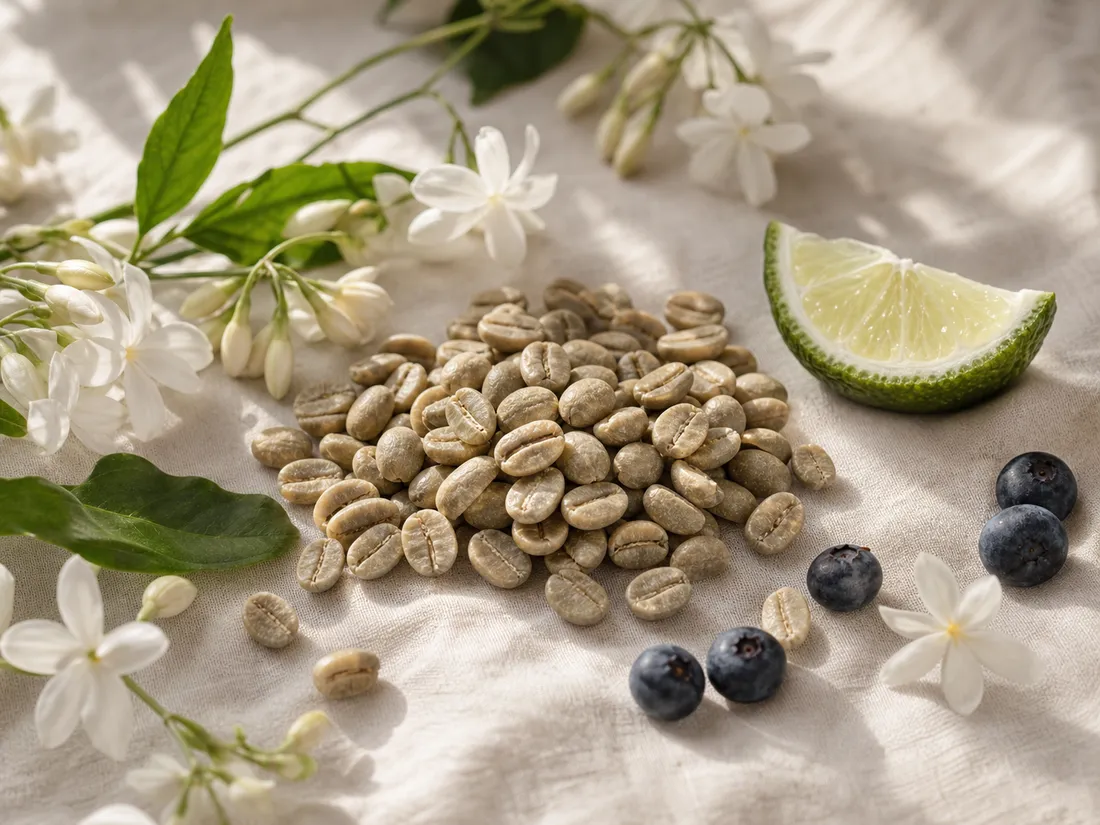
If a single Ethiopian coffee taught the world what “floral” means in a cup, it was Yirgacheffe. Once part of Sidama, it broke out as its own name because the cup is unmistakable: intense jasmine aromatics, bergamot like the oil in Earl Grey, a squeeze of lemon zest and a crisp, tea-like finish. Washed lots show that clarity best; naturals turn it toward blueberry and strawberry while keeping the perfume. It is the coffee to reach for when you want to taste exactly what makes Ethiopia special — and it is best enjoyed black, where nothing gets in the way.
Shop Yirgacheffe beans
Sidama (Sidamo) — balanced and citrusy
Sidama is the big, generous heart of southern Ethiopian coffee — a vast region of microclimates that yields some of the most reliably delicious, crowd-pleasing cups in the country. Where Yirgacheffe is a soloist, Sidamo (the two names are used almost interchangeably) is the full choir: balanced citrus of orange and grapefruit, ripe berry, honeyed sweetness and a floral lift underneath. Washed Sidamo is bright and clean; a natural Sidamo turns jammy and sweet enough to stand up in milk. Station names you will see a lot — Bensa, Bombe, Nensebo — are all Sidama sub-zones, each with its own accent.
Shop Sidamo beans
Guji — fruit-forward and syrupy
Guji borders Sidama and for years was sold under its name, but it has earned its own reputation as the region for pure, syrupy fruit. Grown in high evergreen forest on some of Ethiopia's most fertile soil, Guji cups lean intensely sweet and floral — peach, apricot, mango — with a mouthfeel thick enough to feel almost like nectar. Naturals and the newer anaerobic lots push this even further into wine and tropical fruit. If Yirgacheffe is delicate and Sidamo is balanced, Guji is the showstopper: the one that makes a first-time specialty drinker say “wait, coffee tastes like this?” Zones to watch include Hambela, Uraga and Shakiso.
Shop Guji beans
Harrar — the bold, wild east
Harrar is the outlier — a genetically distinct, wild-varietal coffee from the dry east, processed almost entirely by natural sun-drying and sorted by hand. The result is heavy-bodied and wine-like, with pungent blueberry and blackberry jam, dark chocolate and a spiced edge. Beans are traditionally graded as Longberry, Shortberry and Mocha (the peaberry). It is the antithesis of a clean washed Yirgacheffe, and coffee lovers tend to fall hard for one camp or the other.
Shop Harrar beans
Jimma, Limu & Kaffa — the earthy, forested west
The west is Ethiopia's quieter, older half. Jimma (Djimmah) is the country's largest catchment and grows coffee genetically closest to the original wild forest plants — clean and low-acid with floral chocolate notes when washed, bold and earthy when dry-processed. Limu is the refined one: mild and sweet with caramel, red apple and gentle baking spice. And Kaffa — the region that gives coffee its name — is the last home of truly wild-growing Arabica, its cups rustic and complex with wild-herbal aromatics and deep dark fruit. These lots reach Malaysia less often than the southern stars, so the shelf below is smaller — but when a roaster does bring one in, it is worth grabbing.
Shop western Ethiopian beans
More Ethiopian lots & blends
Plenty of great Ethiopian coffee arrives as a single-origin lot without a headline region on the label, or as part of a blend built to show off that Ethiopian brightness. Here is a rolling shelf of the rest — everything Ethiopian from Malaysian roasters that did not slot neatly into a region above.
More Ethiopian beans & blends
The buna ceremony — coffee as a social act
In Ethiopia, coffee is not a drink you grab. It is a ceremony you are invited into.
It is worth knowing where all this coffee comes home to. In Ethiopia, coffee — buna — is the centre of social life, most fully in the buna ceremony: a slow, three-round ritual led by a woman host, from the first round (Abol) through the second (Tona) to the blessing (Baraka). Green beans are roasted over coals in front of guests, ground by hand, and brewed in a clay jebena — the whole thing an act of hospitality, conversation and, often, quiet conflict-resolution. In parts of southern Oromia there is an even older custom, buna qalaa, where whole cherries are roasted in butter and served as a solid food at weddings and peace-makings. When you brew a Yirgacheffe at home, you are holding the far end of a thousand-year-old thread.
A note on the future
These flavours are not guaranteed forever. Rising temperatures are pushing suitable Arabica land to higher and higher elevations, and researchers project Ethiopia's wild Arabica populations could fall by as much as half by 2088 — a loss that would ripple through the world's coffee gene pool, since Ethiopia holds the largest reservoir of wild Arabica genetics we have. Around a quarter of Ethiopia's population depends on the coffee value chain, so this is an economic story as much as an environmental one. None of that is a reason to stop drinking Ethiopian coffee — if anything, buying carefully sourced, traceable lots from roasters who pay fairly is part of keeping these forests standing. It is just a reason to taste it with a little more attention.
Ready to taste a region?
Every Ethiopian bean above ships from a Malaysian roaster. Browse the full Ethiopia catalogue and filter by roast, taste and process to find the region that fits how you brew.
Shop all Ethiopian beans →Frequently Asked Questions
What is the difference between Yirgacheffe and Sidamo coffee?
Yirgacheffe was originally part of Sidama, so they share a family resemblance, but Yirgacheffe is the more delicate and floral of the two — think jasmine, bergamot and lemon over a tea-like body. Sidamo (also spelled Sidama) is broader and more balanced, leaning into orange and grapefruit citrus, berry and honey sweetness. If Yirgacheffe is the soprano, Sidamo is the full choir.
Is Ethiopian coffee washed or natural?
Both, and the process changes the cup more than the region does. Washed Ethiopian coffee tastes clean, floral and citrusy, with the terroir showing through clearly. Natural (sun-dried) Ethiopian coffee tastes sweeter and fruitier — blueberry, strawberry and a heavier, jammy body. Yirgacheffe and Sidama are famous for washed lots; Harrar is almost entirely natural. Check the bag: it will usually say washed, natural or anaerobic.
What does G1 mean on Ethiopian coffee?
G1, or Grade 1, is Ethiopia's top grade for green coffee — the cleanest lots with the fewest defects. Grading runs from G1 down, and most specialty Ethiopian coffee you will see from Malaysian roasters is G1. It is a quality signal, not a flavour one, but the two tend to travel together.
Which Ethiopian coffee is best for espresso or milk drinks?
Ethiopian coffee is bright and fruity, which is why it is usually brewed as filter or pour-over. If you want it for espresso or with milk, look for a natural or medium-roast lot — a natural Sidamo or a Guji leans jammy and sweet enough to hold up in milk, and some roasters build Ethiopian-forward espresso blends for exactly this. A washed Yirgacheffe with milk can taste thin and tea-like, so it is better black.
Why is it hard to find Harrar coffee in Malaysia?
Harrar is a small, dry-processed, hand-sorted coffee from Ethiopia's arid east, and far less of it reaches specialty importers than the washed coffees of Yirgacheffe, Sidama and Guji. At the moment, no Malaysian roaster we track carries a true Harrar. The closest experience is a bold natural Sidamo or Guji, which share Harrar's wine-like, dark-fruit character.