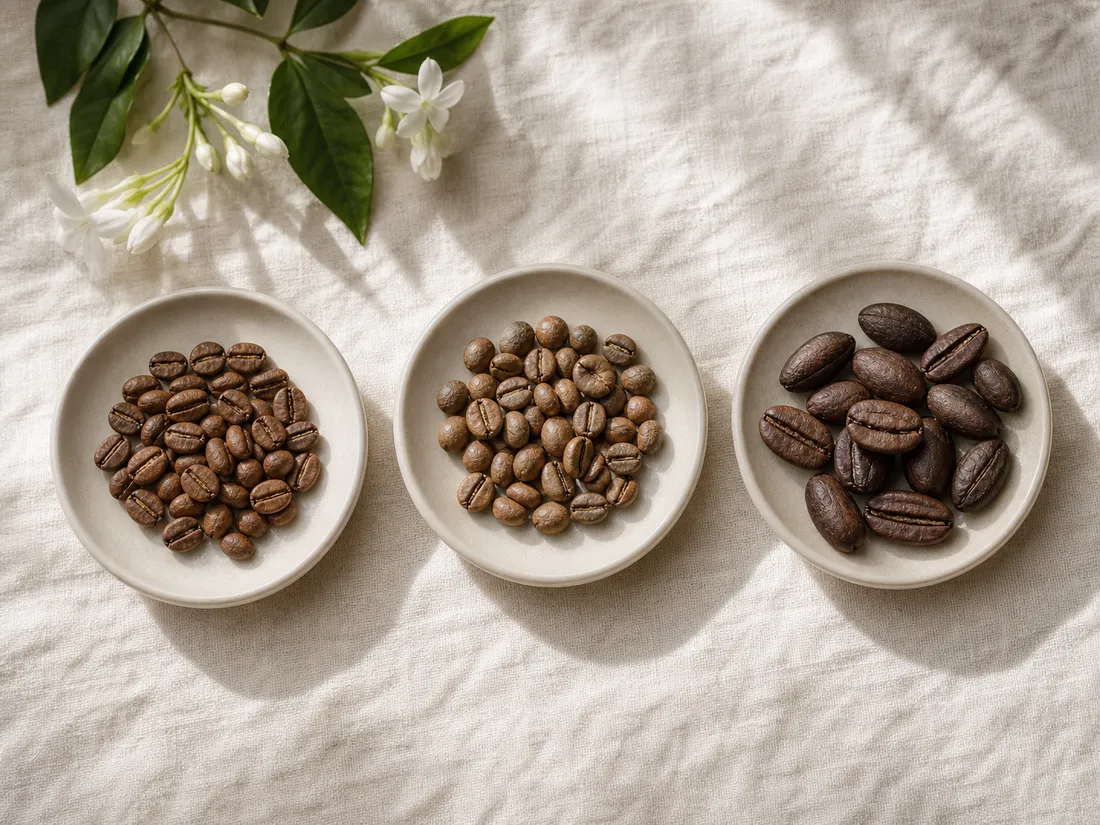
What Arabica actually is
Coffea arabica is one species in a genus of roughly 130 coffee plants, but it's the one that the modern specialty coffee industry is almost entirely built around. It accounts for about 60% of global coffee production by volume and close to 100% of what ends up in a specialty roastery's bag. The plant originated in the highland forests of Ethiopia — in regions like Kaffa and Bale — where wild Arabica trees still grow today at elevations between 1,500 and 2,200 metres.
Within the species, there are dozens of varieties and cultivars that affect flavour significantly. Typica and Bourbon are the oldest widely cultivated varieties. Gesha (or Geisha), originally from Ethiopia but made famous through Panama, became the most talked-about specialty variety of the 21st century after fetching record auction prices. SL28 and SL34 from Kenya, Pacamara from El Salvador, and Catimor hybrids each bring different cup characteristics. The variety matters — but for most Malaysian home brewers just getting started, the origin country and processing method are more practical things to focus on first. Understanding where coffee comes from gives you the framework to make sense of those distinctions.
The broader picture of how Arabica sits alongside Robusta and Liberica is covered in the coffee species guide, which is worth reading if you want the full species-level context.
Why Arabica tastes the way it does
High altitude is the single biggest factor. When coffee cherries develop slowly at 1,500–2,000 metres, cool nights extend the maturation period — sometimes to nine months or more per crop cycle. That slow development allows the plant to accumulate more sugars, a wider range of organic acids, and more aromatic compounds than cherries ripening quickly in hot lowland conditions. The result is complexity: multiple flavour layers that shift as the cup cools, rather than a flat one-dimensional taste.
Arabica also has a lower caffeine content than Robusta — roughly 1.5% by dry weight, compared to Robusta's 2.7%. Caffeine itself tastes bitter, so less caffeine in the seed means less inherent bitterness. Paired with those natural fruit acids (malic acid creates an apple-like brightness; citric acid gives a lemon or bergamot character), Arabica tends toward sweetness and complexity rather than the aggressive punch of high-caffeine Robusta.
Processing — how the cherry is removed from the seed after harvest — is the other major variable. Washed processing strips the fruit before drying, giving you a clean, transparent window into the seed's inherent characteristics. Natural processing dries the whole cherry with the fruit still on, letting fermentation carry fruit sugars and wine-like flavours into the bean. If you want a deep primer on this, understanding coffee flavour notes explains what you're actually tasting and why.
The flavour range within Arabica
One of the things that surprises people new to specialty coffee is how differently Arabica can taste depending on where it was grown. An Ethiopian washed Yirgacheffe and a Brazilian natural Cerrado are both 100% Arabica, but they have almost nothing in common in the cup.
Arabica by origin — what to expect
- Ethiopia (washed) — Jasmine, bergamot, lemon, blueberry, light body, sparkling acidity
- Ethiopia (natural) — Strawberry, fermented fruit, wine, heavy and syrupy
- Colombia (washed) — Red apple, milk chocolate, caramel, balanced acidity, medium body
- Brazil (natural) — Hazelnut, peanut brittle, dark chocolate, low acidity, heavy body
- Guatemala (washed) — Brown sugar, dark fruit, peach, medium-high acidity
- Kenya (washed) — Blackcurrant, tomato, grapefruit, juicy and complex
- Yunnan, China (various) — Brown sugar, floral, mild fruit, approaching Ethiopian profiles
Brazil is the world's largest Arabica producer — roughly 40% of global supply comes from Minas Gerais and São Paulo states — but Brazilian beans are less commonly sold as premium single origins in Malaysia because the cup profile is relatively mild and nutty rather than the complex florals that grab attention. Ethiopian and Colombian origins dominate the Malaysian specialty market because they produce flavours that are dramatically different from anything a Malaysian coffee drinker grew up with in a kopitiam.
The Arabica vs Robusta comparison puts these profiles in direct context with Robusta's earthier, heavier character if you're still deciding between species.
Why Arabica costs more than other species
Several compounding factors drive Arabica pricing above Robusta, and understanding them makes the RM 60–90 price tag on a good specialty bag feel less arbitrary.
The cultivation conditions required by Arabica are naturally limiting. High-altitude farms above 1,000 metres are harder to reach, mechanise, and irrigate than lowland Robusta plantations. Many Arabica farms — particularly in Ethiopia, Colombia, and Guatemala — are small-holder plots of less than 5 hectares, often worked by hand. Selective hand-picking, where harvesters choose only ripe red cherries and leave green ones for a later pass, is labour-intensive but essential for quality. A single experienced picker might harvest 50–80kg of cherries per day, which yields only about 10–16kg of dried green coffee.
After picking comes processing. Washed Arabica requires access to clean water, fermentation tanks, and raised drying beds where beans dry evenly over 10–21 days. Natural processing is less water-intensive but requires even more attention — fruit rotting on the drying bed can ruin entire batches. These post-harvest steps require infrastructure, knowledge, and time that commodity Robusta operations don't invest in.
Specialty grading adds another layer. The Specialty Coffee Association (SCA) scores green (unroasted) coffee on a 100-point scale, and only lots scoring 80 or above qualify as "specialty". Graders check for defects, cup multiple samples, and assess aroma, acidity, body, sweetness, and finish. Passing this threshold commands a premium price at the farm level, which flows through to the consumer. A 250g bag of specialty Ethiopian Arabica in Malaysia typically lands between RM 50 and RM 95; exceptional micro-lots or rare varieties like Gesha can exceed RM 150 for 100g.
Arabica in the Malaysian specialty scene
Malaysia's specialty coffee scene accelerated significantly from around 2012 to 2015, when a wave of KL roasters — VCR, Feeka, Artisan, Pulp — started offering single-origin Arabica and bringing proper brewing equipment into cafes. Before that, specialty Arabica was available but niche; most Malaysians encountered coffee through kopitiam cups built on Robusta and Liberica blends. The shift toward Arabica in urban coffee culture has been significant and fast.
Today, Malaysian roasters source Arabica from Ethiopia, Colombia, Brazil, Thailand, Taiwan, and increasingly from Yunnan province in China, which sits at high enough altitudes to produce quality lots that compete with more established origins at lower shipping costs. You can find Ethiopian beans and Colombian origins stocked by specialty-focused sellers including The Beans Hub.
There's also a quiet conversation happening about whether Malaysia could grow commercial-scale Arabica domestically. Cameron Highlands sits at 1,300–1,800 metres — technically within Arabica's altitude range — and experimental plots do exist. But commercial volumes are tiny, and the quality conversation is still early. For now, Arabica in Malaysia means imported beans, and understanding origin is the key to buying well.
Liberica, by contrast, is the native Malaysian coffee story — the Liberica guide covers that species and its role in Malaysian culture in full.
How to choose your first Arabica bag
If you've been drinking kopi or commercial ground coffee and want to try specialty Arabica for the first time, keep it simple: pick a washed Ethiopian or washed Colombian, and brew it as a pour-over or Aeropress. Avoid espresso as your first experiment — espresso is an unforgiving method that amplifies any brewing errors, and the extraction variables are harder to control without equipment.
Buying tip
Look for a roast date on the bag — not a "best before" date. Specialty Arabica tastes best between 7 and 30 days after roasting. If the bag only has a best before date printed 12 months out, the roast date isn't being tracked, which is often a sign of lower quality control.
Grind fresh if you can. A hand burr grinder in the RM 80–150 range makes a noticeable difference compared to buying pre-ground, because Arabica's delicate aromatics start dissipating within 15 minutes of grinding. Pre-ground is fine for getting started, but once you've had freshly ground specialty Arabica, it's hard to go back.
In terms of roast level, medium or medium-light roasts preserve the most origin character in Arabica — the fruit notes, the floral aromatics, the brightness that makes specialty coffee different from kopitiam coffee. Dark roasts push those flavours out and replace them with roast-driven bittersweet notes, which is not wrong, but it defeats the purpose of paying for a high-quality origin bean. Browse Arabica options at The Beans Hub to see what's currently available, or explore the full shop if you want to compare origins side by side.
Frequently Asked Questions
What does Arabica coffee taste like?
Arabica has a wide flavour range depending on origin and processing. Common descriptors include fruit (berries, citrus, stone fruit), floral notes (jasmine, rose), chocolate, caramel, and bright acidity. Ethiopian Arabica tends toward floral and berry; Colombian toward apple, chocolate and caramel; Brazilian toward nuts and low acidity. Processing method also shifts the profile significantly — washed lots taste cleaner and brighter, naturals heavier and more fruit-forward.
Why is Arabica coffee more expensive than Robusta?
Arabica requires high-altitude growing conditions (1,000–2,000m), which limits where it can be cultivated and makes farming more difficult. The plants yield less fruit per tree than Robusta, cherries are often hand-picked selectively for ripeness, and post-harvest processing is labour-intensive. All of this drives up the cost per kilogram before it even reaches a roaster. Specialty Arabica — graded above 80 points on the SCA scale — adds further selection and quality standards that increase cost further.
What is the best Arabica coffee for beginners in Malaysia?
Start with a washed Ethiopian or washed Colombian single-origin in the RM 50–80 range for 250g. Washed processing gives you the clearest expression of the bean's natural flavour without the heavier fermented notes of naturals. Ethiopian washed lots typically show jasmine and citrus; Colombian washed lots tend toward red apple and milk chocolate. Both are widely available from Malaysian specialty roasters and through online shops like The Beans Hub.
Is all specialty coffee Arabica?
Almost all of it is, but not technically all. The Specialty Coffee Association (SCA) grading system — which scores green coffee above 80 points as "specialty" — was developed primarily around Arabica. However, specialty-grade Robusta does exist, and Malaysia's Liberica is gaining attention in specialty circles. In practice, if you're buying from a specialty roaster in KL, you're almost certainly drinking Arabica.