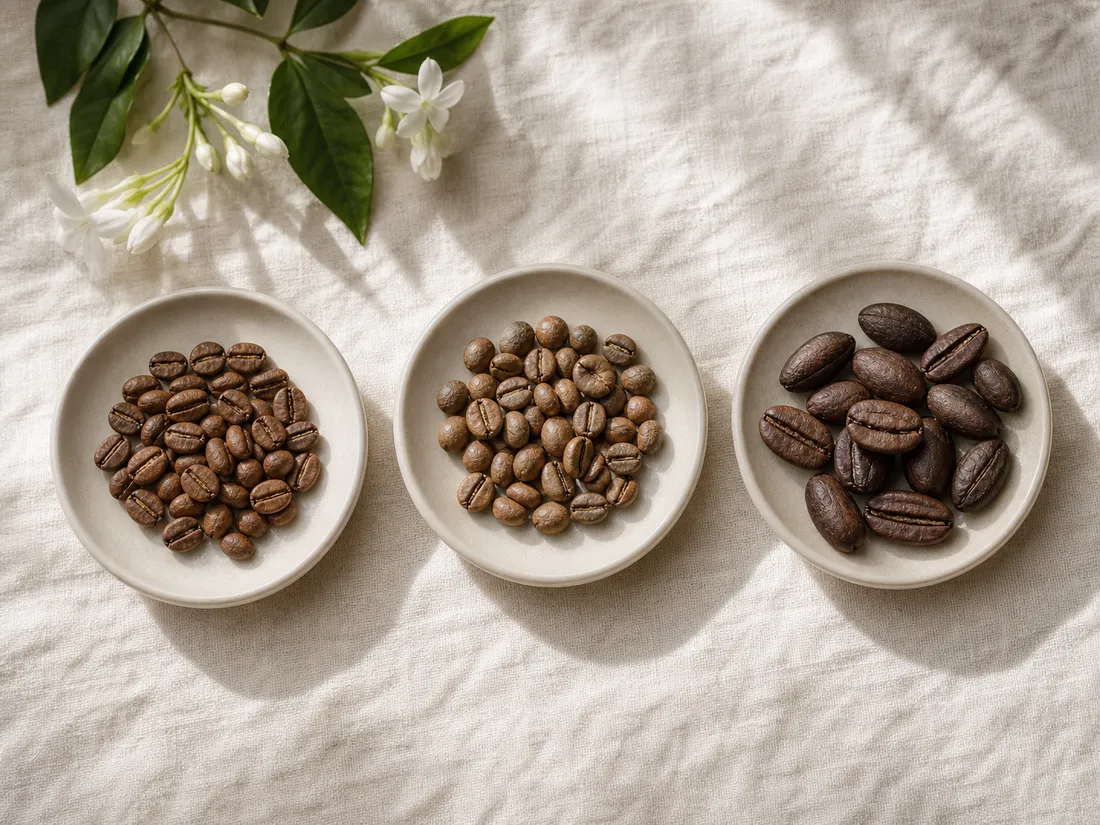
What Robusta actually is
Coffea canephora — sold commercially under the name Robusta — is the second most widely grown coffee species in the world, accounting for roughly 40% of global production. The name "Robusta" is a trade name, not the botanical species name, but it's stuck in the industry because it captures something real about the plant: it's genuinely robust. It grows from sea level to about 800 metres altitude, thrives in hot and humid conditions, resists disease and pests far better than Arabica, yields more fruit per tree, and matures faster. From a farming economics standpoint, Robusta is the easier species to grow at scale.
The plant's hardiness comes partly from its chemistry. Robusta contains approximately 2.7% caffeine by dry weight, compared to Arabica's 1.5%. Caffeine is a natural insect repellent — in sufficient concentrations, it's toxic to many insects and inhibits seed germination of competing plants. Growing in lowland conditions where insect pressure is higher, Robusta evolved more caffeine as a defence mechanism. That same caffeine content makes the bean taste bolder and more bitter in the cup, and it's one reason Robusta-dominant blends hit differently than pure Arabica.
The full species comparison — including where Robusta sits relative to Arabica and Liberica — is in the coffee species guide. The Arabica vs Robusta comparison puts these two species side by side in more detail if you're trying to decide between them.
Why Robusta has a bad reputation
Robusta's reputation in specialty coffee circles is poor, and it's not entirely unfair — but it's also not the full picture. The problem starts at the farm level. Because Robusta is easier to grow and commands a lower price than Arabica, there's less economic incentive to invest in careful cultivation, selective picking, or quality processing. Much of the global Robusta supply is strip-harvested (all cherries removed at once regardless of ripeness), wet-hulled or dry-processed under inconsistent conditions, and graded loosely. Defect rates in commodity Robusta are high, and defective beans in the cup mean bitterness, sourness, rubber, and astringency.
The second problem is dark roasting. To mask those processing defects, commodity Robusta is typically roasted very dark — beyond second crack, sometimes to a near-black colour. Heavy roasting does cover up the worst defect flavours, but it also destroys any positive flavour compounds the bean might have had. The result is a flat, harsh, one-dimensional bitterness that tastes less like coffee and more like burnt grain. This is what most people have in mind when they say "Robusta is low quality".
What that experience actually reflects is poor processing and aggressive roasting of commodity-grade beans — not the full potential of the species. The distinction matters, and it's worth understanding before you write off an entire species based on what's in a RM 12 sachet pack.
What good Robusta actually tastes like
Specialty-grade Robusta — properly processed, cupped and graded, roasted with care — tastes like a specific and legitimate cup that's worth understanding on its own terms rather than comparing unfavourably to Ethiopian Arabica.
Specialty Robusta flavour profile
- Dark chocolate — the most consistent positive descriptor. Dense, somewhat bitter, cocoa-driven.
- Tobacco and earth — a dry, warm earthiness without the musty or rubber notes of commodity Robusta.
- Grain and walnut — particularly in washed Robusta lots, a clean grain sweetness comes through.
- Heavy body — heavier than almost any Arabica origin, with a thick, almost syrupy mouthfeel.
- Low to no acidity — minimal fruit acids, which makes it a smooth, less "bright" cup.
Vietnamese specialty Robusta — from the Central Highlands region — has been gaining serious attention from Western roasters who previously dismissed it entirely. Ugandan Robusta, washed and carefully processed in the Rwenzori region, has appeared at international cupping competitions with respectable scores. These aren't anomalies; they're demonstrations of what the species can do with proper treatment. Understanding what drives those flavour notes is covered in more depth in the coffee flavour notes guide.
Robusta's lack of acidity is actually a selling point for some drinkers. If you find Ethiopian or Kenyan Arabica too bright or acidic for your palate, a well-made Robusta-dominant cup might be far more comfortable to drink daily. Malaysian kopitiam regulars have known this for generations, even if they didn't frame it in those terms.
Robusta in Malaysian coffee culture
Robusta is the backbone of traditional Malaysian kopi alongside Liberica, and understanding it means understanding how kopitiam coffee actually works. The beans arrive at the roastery green, then go into a large drum with rock sugar and sometimes butter or margarine. The drum rotates over high heat for an extended period — the exact time and temperature vary by roastery and are often guarded as trade secrets. The sugar melts and caramelises onto the bean surface, the beans darken significantly, and the result is a coated, intensely dark roast quite unlike anything produced by a Western specialty roaster.
This kopi roasting style transforms Robusta's natural profile. The sugar coating adds a slight caramel sweetness that tempers the bitterness. The high heat drives the roast well beyond what specialty coffee would consider acceptable, compressing the flavour profile into something more singular: dark, bitter, bittersweet, heavy. And then it gets brewed through a cloth sock at very high coffee-to-water ratios — the concentrate that comes out is strong enough to hold its own against a generous pour of sweetened condensed milk.
That pairing — strong dark Robusta with condensed milk — is one of the great flavour combinations in Malaysian food culture. The bitterness of the coffee, the richness of the condensed milk, the slight sweetness tying it together: it's a cup calibrated for the Malaysian palate over more than a century. The Malaysian coffee heritage guide covers this tradition fully, including the Hainanese and Hokkien origins of kopitiam culture.
Robusta also underpins almost all commercial instant coffee sold in Malaysia — the sachets of 3-in-1 that are still the most common coffee format by volume in the country. The convenience format depends on Robusta's higher yield, lower cost, and robustness through the spray-drying process that creates instant coffee powder.
When to choose Robusta
There are legitimate reasons to reach for Robusta over Arabica, beyond tradition or price.
If you're making espresso-based drinks at home and you want a thicker crema and heavier body, adding 10–20% Robusta to an Arabica blend is a proven technique. Italian espresso culture has used this approach for decades — many classic Italian house blends run 20–30% Robusta specifically because it contributes the thick, stable crema and body that pure Arabica espresso sometimes lacks, particularly with lighter-roasted beans. The caffeine boost is a secondary benefit.
If your palate genuinely doesn't get along with the brightness and acidity of specialty Arabica — and many people's don't, especially if you grew up with kopi — then a good quality Robusta blend is a more suitable daily driver than forcing yourself through coffees that don't suit your taste preferences. Good taste is about knowing what you like and finding quality within that range, not about converting to whatever the specialty industry prizes most.
If you're curious about Robusta as a deliberate exploration, seek out a washed Vietnamese or Ugandan specialty Robusta lot. Brew it as a French press or espresso — methods that emphasise body — and taste it without the filter of expecting Arabica flavours. The Arabica vs Robusta comparison gives you a structured framework for that tasting if you want to evaluate the two side by side.
Frequently Asked Questions
What does Robusta coffee taste like?
Commodity Robusta tends toward harsh bitterness, rubber, and grain — which is why it has a poor reputation in specialty circles. Good quality Robusta, however, tastes like dark chocolate, tobacco, earth, and grain, with a very heavy body and low acidity. Specialty-grade Robusta from Uganda or Vietnam can be genuinely complex within those parameters. The key variable is processing quality — poorly processed Robusta is unpleasant, well-processed Robusta is a legitimate cup.
Why does Robusta have more caffeine than Arabica?
Caffeine in coffee plants evolved primarily as a natural insect repellent — it's toxic to many insects at sufficient concentrations. Robusta grows at lower altitudes in hotter, wetter conditions where insect pressure is higher, so the plant evolved a higher caffeine concentration (around 2.7% vs Arabica's 1.5%) as a defence mechanism. This higher caffeine also makes the plant more bitter and naturally disease-resistant, contributing to its hardiness.
Is Robusta used in Malaysian kopi?
Yes, extensively. Traditional Malaysian kopi — the cup you get at a kopitiam — is typically made from Robusta, Liberica, or a blend of both, roasted in the traditional drum-roasting style with sugar and sometimes butter. This produces a caramelised, dark roast with a heavy body and bitter-sweet character that pairs well with condensed or evaporated milk. It's a completely different preparation tradition from specialty coffee.
Is Robusta coffee bad quality?
Commodity Robusta is often poor quality — harvested carelessly, processed without quality control, and sold without grading. But that's a quality and processing problem, not an inherent flaw of the species. Specialty-grade Robusta exists, is graded by the SCA, and can produce complex, distinctive cups. The negative reputation of Robusta comes from the commodity market, not from the species' full potential.