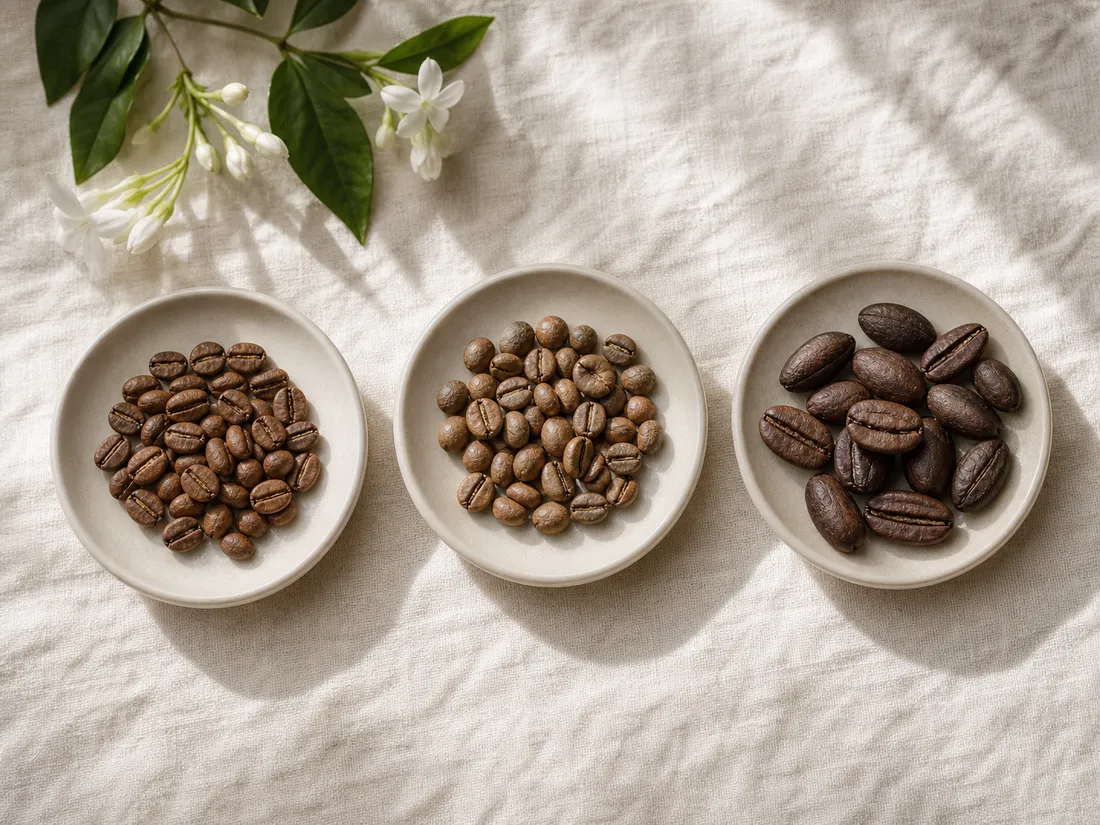
The quick comparison
Arabica gets most of the attention in the global coffee conversation. It's the standard for specialty coffee, the species behind virtually every single-origin bag at a KL cafe, and the benchmark against which other coffees tend to be judged. Liberica, by contrast, is barely discussed internationally — yet Malaysia grows approximately 90% of the world's commercial Liberica supply, and millions of Malaysians have been drinking it daily in kopitiam kopi for well over a century. The comparison matters precisely because both species are part of Malaysian coffee life, just in completely different contexts.
The full species guide covers all three major species together. This page focuses on the direct Liberica-Arabica comparison — what makes them different, where each is used, and what you should try first.
Liberica vs Arabica — at a glance
| Liberica | Arabica | |
|---|---|---|
| Origin | West Africa → Malaysia | Ethiopia |
| Altitude | 200–1,000m | 1,000–2,000m |
| Bean shape | Large, asymmetric, hooked | Oval, regular |
| Flavour | Woody, smoky, jackfruit, floral | Bright, fruity, floral, chocolate |
| Body | Full and heavy | Light to medium |
| Price | Commodity: low; Specialty: varies | Ranges widely (RM 40–150+/250g) |
| Best for | Traditional kopi, adventurous brewers | Specialty filter and espresso |
How they taste differently
Put a properly brewed washed Ethiopian Arabica and a specialty-processed Liberica side by side and you're tasting two completely different flavour universes. The Arabica might give you jasmine, lemon zest, blueberry, and a clean sparkling brightness — a cup that smells and tastes almost delicate, with high clarity and a finish that changes as it cools. The Liberica is going to hit differently: bold, woody, smoky aroma that fills the room as it brews, full body, a fruit note that's more tropical and fermented — sometimes described as jackfruit-like — and a long, lingering aftertaste.
The contrast isn't just about intensity. The aromatic compounds are genuinely different. Arabica's brightness comes from malic and citric acids that produce fruit-like flavour notes and give the cup structural acidity. Liberica has a different acid profile — less of the fruit-forward acids, more of the heavier, earthy compounds that produce the woody and smoky character. Where Arabica's complexity tends to reveal itself in layers as you taste — different notes appearing at different temperatures — Liberica's character is more singular and immediate, dominated by that bold, roasted tropical quality.
Traditional kopi-roasted Liberica, processed with sugar in the drum-roasting style, is another experience again: the roast compresses the flavour further, the sugar creates a caramelised coating, and the result is the familiar dark, bittersweet heaviness of kopitiam coffee. Specialty-processed Liberica — lighter roast, careful drying — shows the woody and floral notes more clearly without the dominant dark roast overlay.
For context on Arabica's full flavour range — which spans from delicate Ethiopian florals to heavy Brazilian nuts — the Arabica guide breaks it down by origin. And the Liberica guide covers what makes specialty Liberica different from the commodity version most Malaysians have encountered.
Growing conditions and processing
The growing conditions for each species explain a lot about their flavour differences. Arabica's requirement for altitude — 1,000 to 2,000 metres — is not incidental. At those elevations, cool nights slow cherry development dramatically, giving the seed more time to accumulate sugars and aromatic compounds. The result is a denser, more chemically complex seed that translates to complexity in the cup. Arabica plants are also more fragile: susceptible to coffee leaf rust, sensitive to temperature fluctuations, and lower-yielding per tree than both Robusta and Liberica.
Liberica grows in conditions that would stress or kill an Arabica plant — hot, humid lowlands between roughly 200 and 1,000 metres. In Johor, the primary Malaysian growing region, Liberica trees can grow to 9–10 metres tall (dramatically taller than Arabica, which stays at 3–5 metres typically). The plants are vigorous, disease-resistant, and productive, though the larger size makes mechanical harvesting difficult and hand-picking essential. The bean's larger size and lower sugar content (relative to Arabica) partially explain the heavier, less fruit-forward cup character.
Processing matters for both species, but the contrast between traditional and specialty approaches is especially stark with Liberica. Traditional kopi-roasting — drum-roasting with sugar at high heat — is as different from specialty roasting as frying is from steaming. Specialty Liberica processed on raised drying beds with careful fermentation control is a fundamentally different product from kopi-roasted Liberica, even if they come from the same farm. This is worth understanding before you decide you don't like one species or the other based on a single experience.
How each species is used in Malaysia
The two species occupy almost entirely separate worlds in Malaysia's coffee landscape, which is one of the things that makes the country's coffee culture so interesting. Liberica is the traditional species — it's in kopitiam kopi across the peninsula, particularly in Johor and the south, served in the traditional preparation style with condensed milk or black with sugar. Most Malaysians who drink kopi daily have been drinking Liberica for years without knowing its name.
Arabica is the specialty species — imported from Ethiopia, Colombia, Brazil, and other high-altitude origins, roasted by specialty roasters in KL, Penang, and Johor Bahru, served as V60 or Aeropress in specialty cafes that have proliferated rapidly since around 2015. The specialty coffee movement in Malaysia is largely an Arabica story. It brought new vocabulary (single origin, processing methods, flavour notes), new brewing equipment, and a different relationship with coffee as something to taste carefully rather than just consume quickly.
There's a growing overlap. Some specialty roasters in Malaysia are now working with local Liberica from Johor, processing it with the same attention they'd give an Ethiopian natural — selective picking, controlled fermentation, raised bed drying, light roasting. The result bridges the two worlds in a way that's uniquely Malaysian. The Malaysian coffee heritage guide covers how these two traditions developed and how they're now converging. It's also worth reading the Arabica vs Robusta comparison to understand where Robusta fits into this picture alongside both species.
Which one to try first
If you're coming from specialty coffee and have a well-developed palate for Arabica, try Liberica as a deliberate cultural experience. Look for specialty-processed Liberica from a Malaysian roaster working with Johor farmers — brew it as a pour-over, taste it black, and approach it with curiosity rather than expecting it to taste like Ethiopian coffee. The woody, smoky, tropical fruit character is genuinely unusual even by the standards of adventurous specialty coffee drinkers. It's a cup that rewards open-mindedness.
If you're coming from traditional kopitiam culture and are curious about specialty coffee for the first time, start with Arabica — specifically a washed Colombian or Ethiopian in the RM 50–80 range, brewed as a pour-over. The brightness will likely feel different from kopi, possibly sour if your palate isn't calibrated for it. Give it two or three tries, black, at different temperatures as the cup cools. The complexity that reveals itself over 15 minutes of drinking a well-made Arabica pour-over is something that doesn't exist in kopi, and it's worth experiencing.
Try them side by side
The most instructive thing you can do is taste both in the same session — a kopitiam kopi (Liberica or Liberica-Robusta blend, kopi-roasted) alongside a specialty pour-over Arabica. The contrast is dramatic enough to make the differences immediately obvious in a way that reading about them can't fully convey.
Both species have real merit. Liberica is part of Malaysia's agricultural and cultural identity in a way that Arabica — however much the specialty industry has adopted it — simply isn't. Arabica offers complexity and variety that Liberica, at least in its commodity form, doesn't match. The best approach is to understand and appreciate both rather than treating them as competitors.
Frequently Asked Questions
What is the difference between Liberica and Arabica coffee?
Liberica is a larger-beaned species grown primarily in Malaysia's lowlands, with a woody, smoky, jackfruit-like flavour and very full body. Arabica grows at high altitude (1,000–2,000m), has a much wider and brighter flavour range — fruit, floral, chocolate, citrus — and is the standard for the global specialty coffee industry. Liberica is deeply embedded in Malaysian kopitiam culture; Arabica dominates specialty cafes. They're different enough that comparing them is almost like comparing different beverages.
Does Liberica taste better than Arabica?
That depends entirely on your palate and context. Specialty-processed Arabica has wider flavour complexity and is the benchmark for the global specialty industry. But Liberica has a unique character — woody, smoky, floral, jackfruit — that Arabica simply doesn't have. If you grew up with kopitiam kopi and find specialty Arabica too bright or acidic, Liberica's heavier, more grounded profile may suit you better. Both are worth trying on their own terms.
Can I brew Liberica like normal specialty coffee?
Yes, with some adjustments. Liberica beans are larger and denser than Arabica, so you may need to adjust grind size slightly — often a touch coarser for the same brewing method. Brew water around 90–93°C works well. Pour-over and French press both work for specialty-processed Liberica. Traditional kopi-style Liberica (roasted with sugar) is best prepared the traditional way through a cloth sock filter as concentrated coffee.
Where can I buy Liberica coffee beans in Malaysia?
Traditional kopi-roasted Liberica grounds are available at provision shops, wet markets, and kopitiam suppliers throughout Malaysia — particularly in Johor, where most Malaysian Liberica is grown. Specialty-processed Liberica is less common but increasingly available from Malaysian specialty roasters focused on local origins. Check The Beans Hub's shop or contact Johor-based roasters who work directly with local Liberica farmers.